
PROJECT: Global Terrorism Data Analysis to identify high-risk regions and generate actionable insights

PROBLEM STATEMENT/ SCENARIO
The Global Counter-Terrorism Alliance (GCTA) has launched an ambitious initiative to identify and address emerging threats across the globe. As part of this effort, the organization has tasked its Data Intelligence Division with analyzing the Global Terrorism Dataset, a comprehensive repository of around 190,000 records of terror incidents spanning five decades.
Context:
I am a Data Analyst working in the Data Intelligence Division. I have been entrusted with the critical task of performing an in-depth exploratory data analysis (EDA) on the dataset to uncover key patterns, identify high-risk regions (hot zones), and generate actionable insights. The insights derived will will be presented to the GCTA executive team, which will inform security policy decisions and guide resource allocation to counteract terrorism effectively.
Thanks for reading RhPt: Coding and Maths! Subscribe for free to receive new posts and support my work.
DATASET
The dataset of a single table, containing 181691 rows and 135 columns.
EXECUTIVE SUMMARY
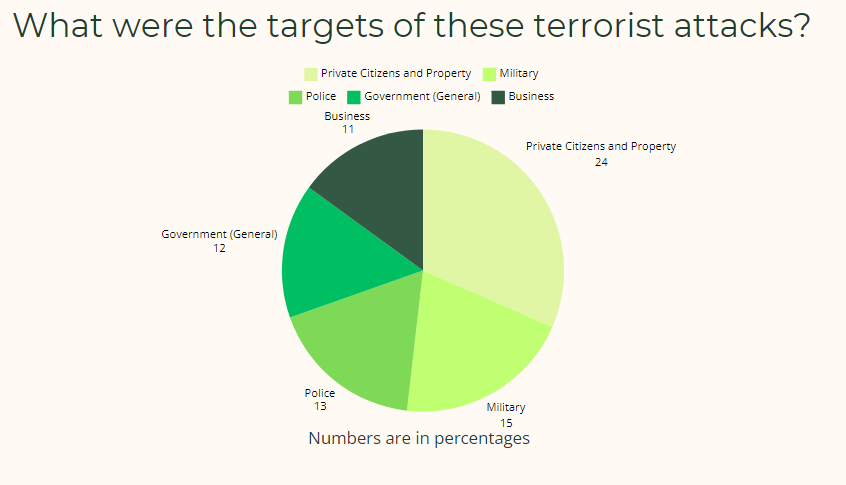
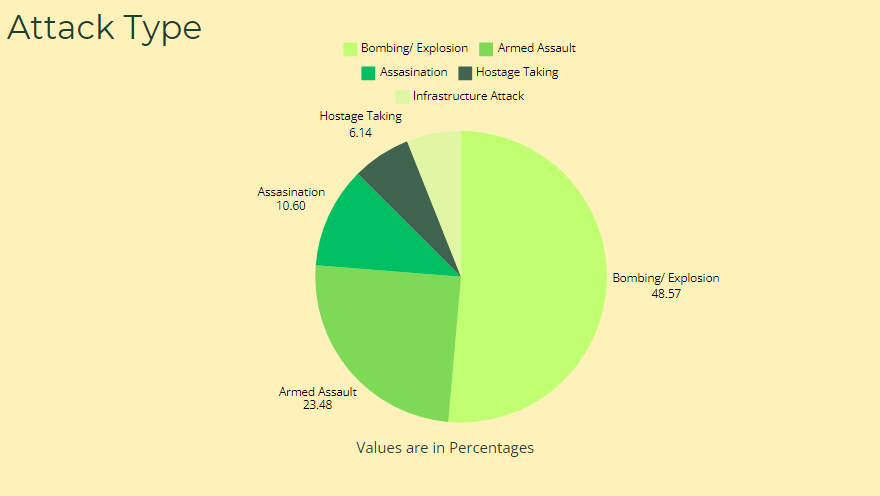
This report summarizes key trends in global terrorism from 1970 to 2017 to inform counter-terrorism strategies and international security summits. The Middle East and North Africa, along with South Asia, have been the most frequent targets of terrorist attacks. Specifically, Iraq, Pakistan, and Afghanistan have suffered the highest number of attacks. The most impacted cities include Baghdad, Karachi, and Lima, highlighting the urban concentration of terrorist activity. The data reveals private citizens and property as the most common targets (24% of attacks), followed by military personnel (15%). This suggests a shift towards tactics aimed at generating widespread fear and disruption. The Taliban, ISIL, and Shining Path emerge as the most active terrorist groups, demanding focused attention from counter-terrorism efforts. Analysis of attack types reveals a preponderance of bombings and explosions (48.57%) and armed assaults (23.5%). This emphasizes the need for strategies to disrupt the acquisition and deployment of explosives and firearms by terrorist organizations.
DEEP-DIVE ANALYSIS
Video Presentation of the Project
The objective is to analyze terrorism data from 1970 to 2017, to reveal significant changes in patterns, methods, and impacts of terrorism globally.
The analysis aims to uncover trends and identify factors driving terrorist activities
Hot Zones of Terrorism:
Observations
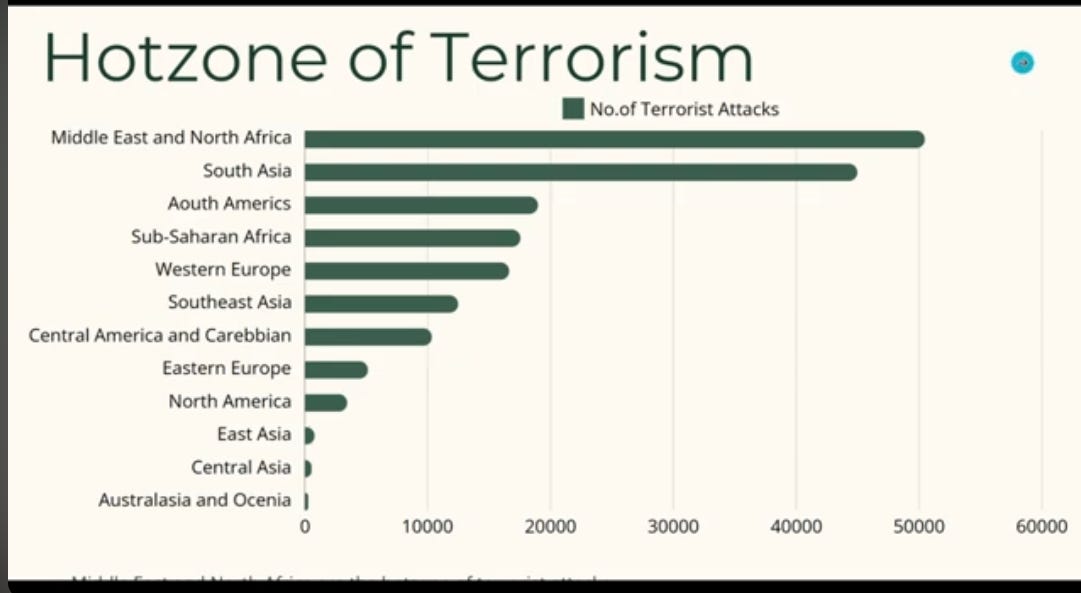
Middle East and North Africa and South Asia experienced the highest number of attacks between 1970 and 2017.
Middle East and North Africa: 5,474 attacks
South Asia: 44,990 attacks
Countries Most Affected:
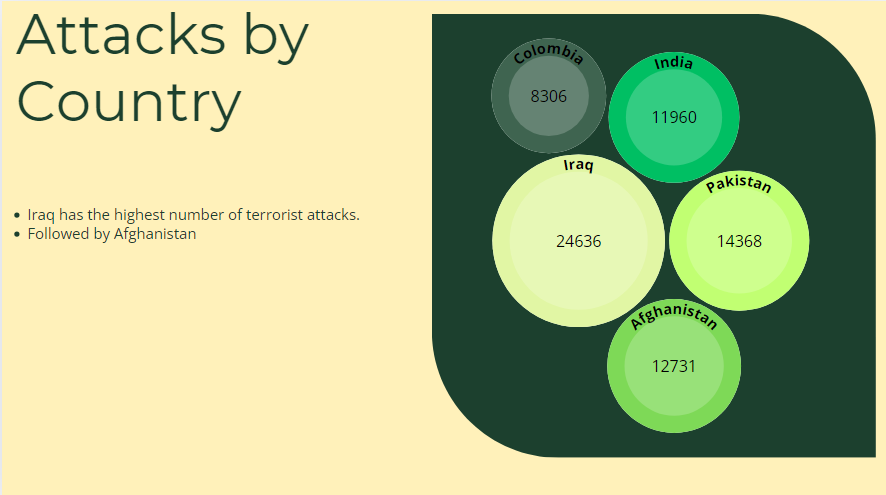
Top 5 countries with the highest number of attacks
Observations and Insights
Regional Concentration: Four out of the five countries with the highest number of attacks - Iraq, Pakistan, Afghanistan, and India - are located in the same geographical region: South Asia and the Middle East. This concentration suggests that regional instability, political conflicts, or the presence of established terrorist networks could be contributing factors to the high incidence of attacks in this area.
Neighboring Countries: Three of the countries - Iraq, Pakistan, and Afghanistan - share borders, which may indicate a potential spillover effect of terrorist activities across national boundaries.1 This proximity could facilitate the movement of militants, weapons, and resources, making it more challenging to contain terrorism within a single country.
Cities with Most Attacks:
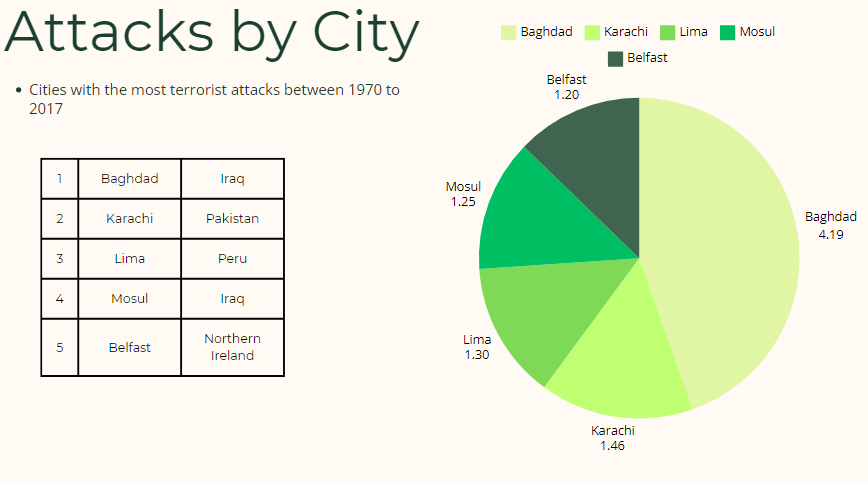
Top 5 cities with the highest percentage of attacks
Observations
It is worth noting that 2 of the top 5 cities, Baghdad and Mosul, are both cities located in Iraq, which was identified as the country with the highest total number of attacks.
Terrorist Groups with Most Attacks:
Observations and Insights
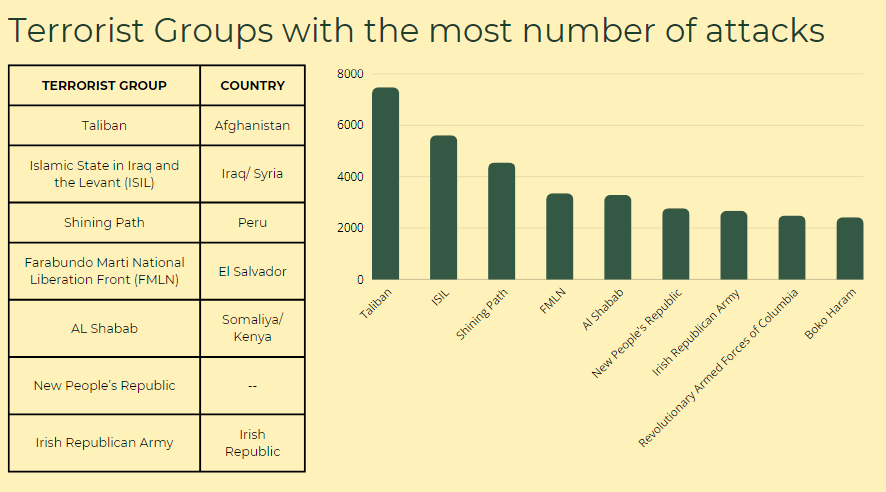
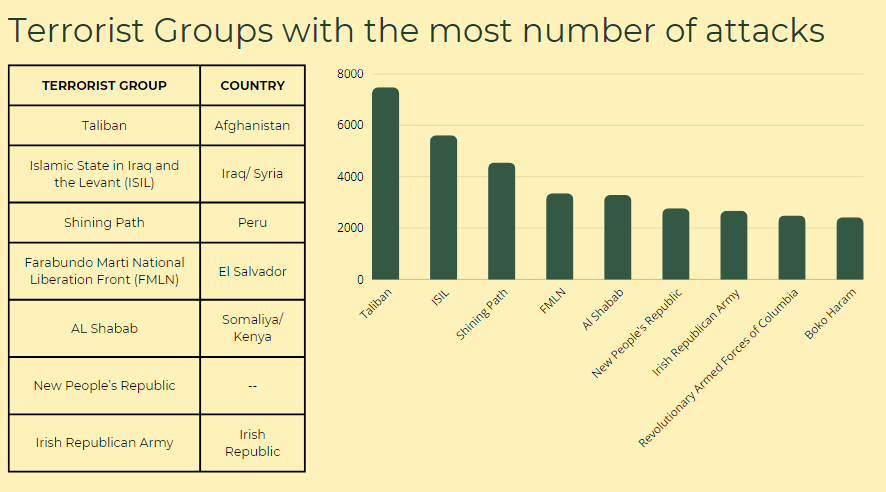
Regional Dominance: The Taliban, originating from Afghanistan, has carried out the highest number of attacks (7,478) over the five decades covered in the sources.1 This, along with the significant number of attacks attributed to ISIL, Al-Shabaab and Boko Haram, underscores the prominent role of groups operating within South Asia, the Middle East, and Africa.1 The geographical concentration of these groups' activities aligns with the regions and countries identified as having the highest number of attacks.
Targets of Attacks:
Observations and Insights:
Civilian Focus: The targeting of private citizens and property in 24% of attacks suggests a deliberate strategy to inflict widespread fear and disrupt societal normalcy. This trend could indicate a shift towards terrorism aimed at undermining public confidence and generating a sense of vulnerability.
Strategic Targets: Attacks on the military (15%), police (13%), and government (12%) represent a more traditional approach to terrorism, often aimed at weakening state authority and security forces. The significant percentage of attacks on these targets suggests that terrorist groups continue to view them as strategically important
Economic Disruption: The targeting of businesses in 11% of attacks highlights the intention to disrupt economic activity and inflict financial damage. This tactic can have far-reaching consequences, impacting not only targeted businesses but also broader economic stability and investor confidence.
Attack Types and Weapons Used:
Observations and Insights
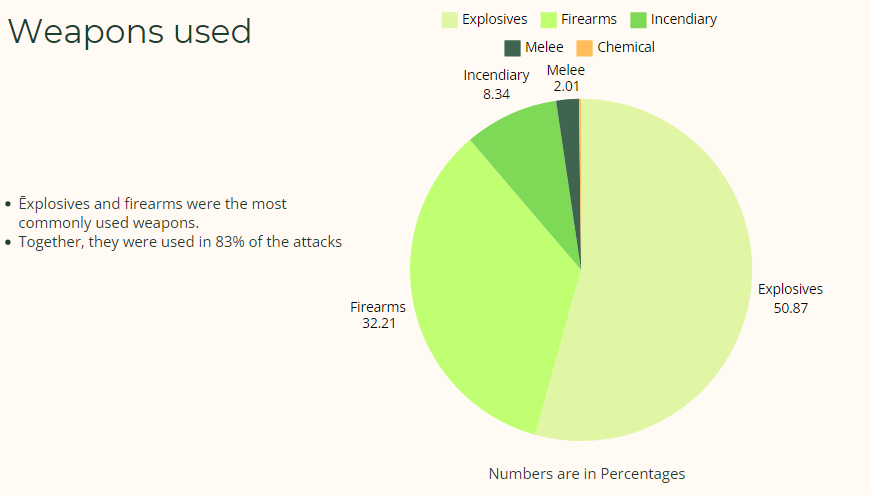
Explosives and Bombings: The prevalence of bombings and explosions (48.57% of all attacks) is directly linked to the widespread use of explosives as the primary weapon (50% of attacks). This suggests that acquiring, manufacturing, and deploying explosives is a key operational focus for many terrorist organizations. Counter-terrorism efforts aimed at disrupting the explosives supply chain, enhancing detection capabilities, and strengthening infrastructure protection could significantly reduce the incidence of this devastating attack type.
Firearms and Armed Assaults: Similarly, the high percentage of armed assaults (23.5% of attacks) aligns with the frequent use of firearms (32% of attacks). This indicates the continued reliance on conventional weaponry to carry out direct attacks. Strategies to limit access to firearms, strengthen border control to prevent illicit trafficking, and enhance tactical response capabilities to armed assaults are critical components of effective counter-terrorism measures.
Shifting Tactics and Weapon Choice: While the sources highlight explosives and firearms as the most common weapons, it's important to acknowledge that terrorist groups constantly adapt their tactics and weapon choices in response to evolving security measures and technological advancements. Monitoring the potential use of chemical, biological, radiological, or nuclear weapons, as well as cyberattacks targeting critical infrastructure, should remain a high priority for counter-terrorism agencies.
LINKS and RESOURCES used:
Analysis done using Python
Presentation created on Canva
Github Link: https://github.com/rohanPatgiri/GRIP-4-Terrorism-EDA
Thanks for reading RhPt: Coding and Maths! Subscribe for free to receive new posts and support my work.